
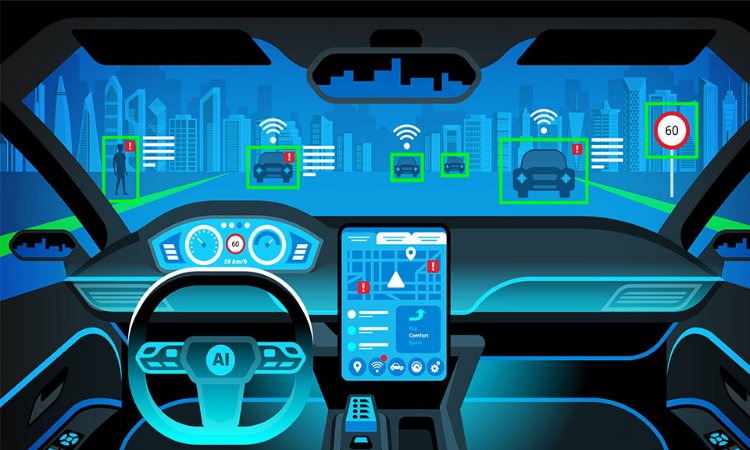
As self-driving technology grows, many people wonder how safe it really is and what’s happening behind the scenes to keep these vehicles reliable. AI plays a major role in this space, especially when using AI for autonomous vehicles and understanding its challenges helps you see why safety remains a top priority. When you break it down, the issues aren’t impossible to solve, but they require careful work so you can trust the technology on the road. The following are some AI safety challenges in autonomous driving:
Understanding the World Around the Vehicle
One major challenge comes from helping autonomous cars properly understand their surroundings. AI relies on cameras, sensors and radar to detect objects, people and road signs. But real roads are unpredictable. Lighting changes, the weather can get rough and objects appear suddenly. When AI misreads something or doesn’t detect it quickly enough, the car may react too slowly or make the wrong decision. Improving how vehicles interpret the world is one of the biggest safety priorities for engineers working with AI for autonomous vehicles today.
Handling Unpredictable Human Behavior
Drivers, cyclists and pedestrians don’t always act in predictable ways. A person can cross the road without warning or a driver may shift lanes without signaling. In each of these cases, an autonomous car needs to notice this immediately and react safely. The challenge lies in teaching AI to understand human behavior in different environments. Even very small delays in judgment can result in road hazards. Developers keep on experimenting with all types of real-life scenarios to ensure autonomous systems remain alert and respond responsibly.
Making Safe Decisions in Complex Situations
Another safety challenge involves decision-making. A self-driving car should choose the safest option, such as slowing down, changing lanes or coming to a complete stop. These choices become more complicated in crowded areas or at major intersections. AI has to examine numerous probabilities simultaneously and choose the best one with little contemplation. It is more difficult than it sounds because some situations don’t have a single obvious answer. Engineers focus on creating systems that remain calm and consistent even under high-pressure situations.
Protecting the System Against Failures
Like any other digital system, autonomous cars can suffer due to hardware or software issues. A sensor might stop working or a camera may malfunction. If the AI doesn’t recognize the failure immediately, the car may lose crucial information. That is why safety teams build backup systems that activate when something goes wrong. These extra layers of protection ensure that even if something fails, the car remains stable and safe.
Guarding Against Cybersecurity Risks
Autonomous vehicles require strong protection against cyberattacks. Because they’re connected systems, there’s a little possibility of someone trying to interfere with how the car works. Developers design strict security controls that protect data, communication channels and every digital component. Companies like Encora support the automotive industry by helping build secure, trustworthy systems that keep both passengers and data safe.
With AI for autonomous vehicles, safety comes from careful testing, constant improvement and a strong understanding of real-world challenges. As technology grows, engineers work hard to make autonomous driving safer, smarter and more reliable. When you understand these challenges in simple terms, you can appreciate how much thought and effort go into building a future where self-driving cars move confidently and safely on every road.




Leave a Reply