

Introduction
Driving under the influence (DUI) is a persistent threat to public safety, responsible for a substantial number of roadway injuries and fatalities each year. As communities and lawmakers grapple with preventing repeat offenses, ignition interlock devices (IIDs) have gained traction as a reliable deterrent for drivers convicted of DUI. Individuals interested in learning about local requirements can find comprehensive details about Arizona ignition interlock rules, which outline mandated usage and best compliance practices for offenders.
These measures are not only designed to penalize but also to educate and protect both offenders and the wider community. IIDs help ensure that drivers cannot operate a vehicle while impaired, effectively interrupting the behavior that led to the offense. Through technological innovation and strengthened laws, DUIs can be addressed at their source—by preventing intoxicated individuals from putting their keys in the ignition.
Public agencies and advocacy groups continue to collaborate with legal professionals to ensure these devices are implemented effectively, thereby improving outcomes for everyone on the road. Notably, several states have updated their IID requirements to incorporate compliance-based removal laws, further increasing their effectiveness and making the consequences for repeat offenses more stringent.
What Are Ignition Interlock Devices?
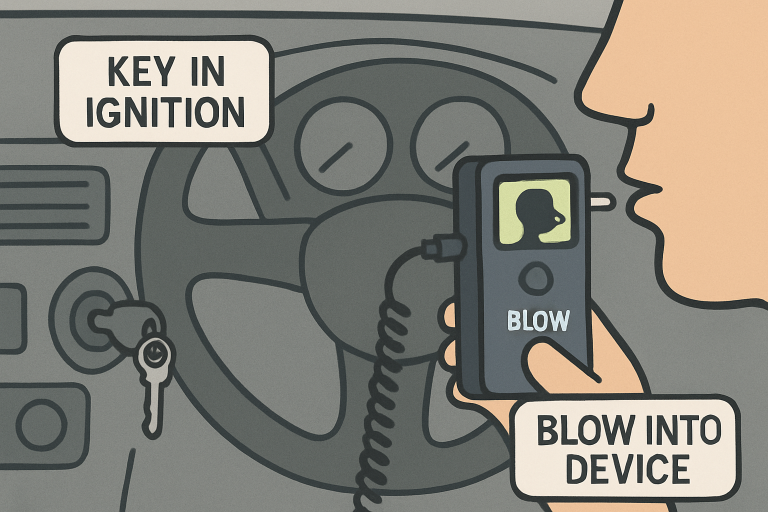
An ignition interlock device is a small, advanced breathalyzer installed in the ignition system of a vehicle. Before starting the car, the driver is required to blow into the device. If the device detects a blood alcohol concentration (BAC) above a preset legal limit—commonly set at 0.02%—the vehicle will not start. This straightforward, preventative measure directly addresses the root of DUI-related incidents by making it nearly impossible for intoxicated individuals to drive.
IIDs are often mandated as a condition of license reinstatement after a DUI conviction. They are also programmed to prompt for random retests during operation, further ensuring that drivers remain sober while behind the wheel. Data from the National Highway Traffic Safety Administration (NHTSA) highlight how IIDs reinforce the legal and societal message that impaired driving is unacceptable under any circumstance.
Effectiveness of IIDs in Reducing Repeat Offenses
Multiple studies demonstrate that IIDs are highly effective in reducing repeat DUI offenses. According to the CDC, ignition interlocks reduce recidivism by approximately 70% while installed, significantly cutting down the chances of a second or third offense. This technology offers an immediate and measurable layer of protection, safeguarding the public from potentially dangerous repeat offenders.
Moreover, IIDs provide a rehabilitation component for offenders. The requirement to remain violation-free for a specific period encourages behavioral change and increases awareness of the dangers associated with impaired driving. As more states enact mandatory IID laws for first-time and repeat offenders, the trajectory of DUI-related crashes and fatalities continues to improve.
Compliance-Based Removal Laws
Compliance-based removal (CBR) laws take the effectiveness of IIDs a step further by requiring offenders to complete a period of violation-free use before the device can be removed from their vehicle. These laws close loopholes and reduce the risk of premature device removal by ensuring that the driver has successfully demonstrated responsible behavior over time.
Data from the Governors Highway Safety Association (GHSA) reveal that states implementing CBR laws consistently report lower recidivism rates. For example, the recidivism rate in states with CBR laws has been as low as 1.7%, compared to significantly higher rates in states that lack such policies. This suggests a strong correlation between strict compliance regulations and improved road safety outcomes, motivating other states to consider similar legislation.
Real-World Examples
The practical impact of IIDs and CBR laws is evident when examining DUI recidivism rates in various states. In Tennessee, the introduction of CBR laws has reduced repeat offense rates to 1.7%. Washington, another early adopter of stringent IID laws, reports a recidivism rate of only 3.7%. By contrast, states without compliance-based requirements, such as Arkansas and Iowa, have recidivism rates of 5.6% and 6%, respectively.
These case studies underscore the indispensable role of combining technology with policy in the fight against impaired driving. The consistent trend across states with robust IID programs and CBR statutes demonstrates that strong enforcement paired with advanced technology leads to significantly better public safety outcomes.
Challenges and Considerations
Despite their proven benefits, the implementation and enforcement of IIDs present challenges. Ensuring uniform installation and continuous monitoring often demands significant resources from the justice system and state agencies. Moreover, some offenders attempt to circumvent the device or seek loopholes in legislation, highlighting the need for vigilant oversight and program improvement.
Another challenge pertains to public acceptance and education. For these devices to reach their full potential, the community must understand both how they work and why they’re necessary. Collaborative outreach involving law enforcement, victim advocacy groups, and public health agencies can aid in destigmatizing IIDs and encouraging voluntary compliance.
Conclusion
Ignition interlock devices represent a crucial advancement in the ongoing battle against drunk driving. Supported by a wealth of research and real-world successes, they significantly lower rates of repeat DUI offenses and shield communities from the devastating consequences of impaired driving. Particularly when paired with compliance-based removal laws, IIDs serve as a practical, evidence-based solution for protecting public roadways. By strengthening enforcement, promoting understanding, and continually refining the legal framework, communities can work towards eradicating the dangers posed by repeat DUI offenders.




Leave a Reply