
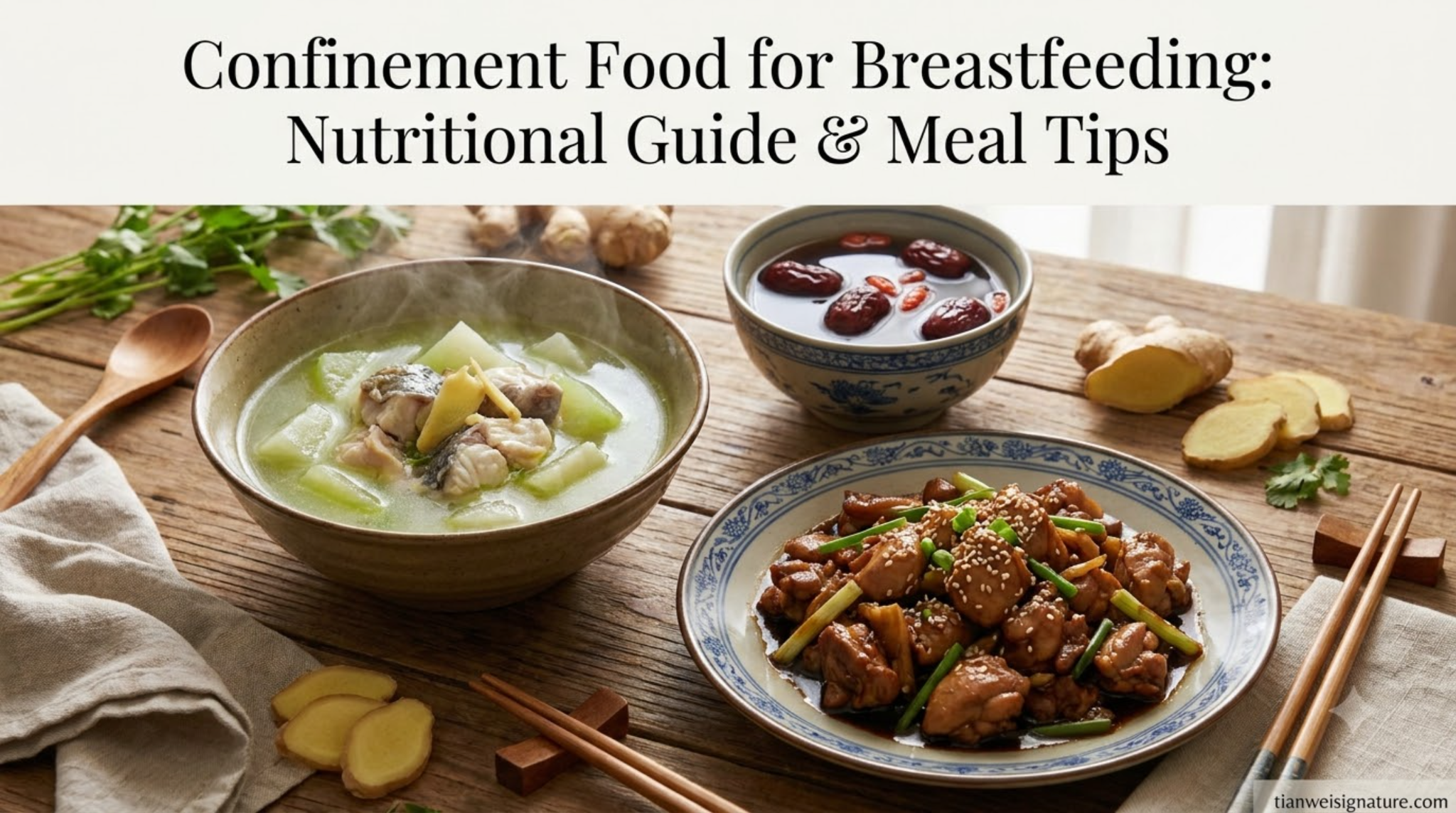
If you are planning your postpartum month and intend to nurse, confinement food for breastfeeding can feel like a big decision. You want meals that are warm, comforting, and culturally familiar, but you also want to know they make nutritional sense when you are healing, feeding a newborn, and running on broken sleep.
In Singapore, many expecting parents start researching early because once the baby arrives, there is often no one to cook. This is especially true for first-time parents, or when grandparents are helping, but everyone has a different “must-eat” list.
Confinement Food for Breastfeeding: What Your Body Actually Needs
Breastfeeding uses energy. Health guidance commonly notes that many well-nourished breastfeeding parents may need about 330-400 extra kcal per day, plus additional fluids to support milk production and recovery.
Rather than chasing one “magic” dish, aim for three things: enough calories, a good spread of nutrients, and consistent hydration. That is what makes the confinement food Singapore families rely on feel supportive rather than stressful.
The core nutrition checklist (simple, practical, doable)
1) Protein for repair and milk-making
Protein supports tissue repair after delivery and also supports milk production demands.
Easy confinement-friendly options:
- Chicken, fish, lean pork
- Eggs and tofu
- Beans, lentils, and soups with added protein
Meal tip: include a palm-sized protein at each main meal, and add eggs or tofu to soups when appetite is low.
2) Iron for postpartum replenishment
Blood loss during birth can make iron especially relevant postpartum. Iron-rich foods are often included in traditional confinement cooking.
Food ideas:
- Lean meats, fish
- Tofu and legumes
- Dark green vegetables in cooked form
Pair iron foods with fruit or veg that contains Vitamin C to support absorption.
3) Calcium for maternal bone health
Calcium matters for your own bone stores while you are lactating.
Options that fit confinement routines:
- Dairy (milk, yoghurt, cheese)
- Fortified alternatives (if preferred)
- Cooked leafy greens (as tolerated)
4) Fibre to make life more comfortable
Constipation is common postpartum, especially with reduced movement and pain relief medications. Fibre helps.
Gentle ways to add fibre without “cold” salads:
- Oats, brown rice, wholegrain noodles
- Stewed fruit, soups with vegetables
- Beans and lentils in smaller portions if you are gassy
5) Fluids, consistently, all day
Breastfeeding parents generally do best when they drink to thirst, and many local guidelines encourage around 8 to 12 glasses daily for lactating women.
If you dislike plain water, rotate:
- Warm water
- Soups and broths
- Warm herbal teas (only if suitable for you)
How to blend tradition and evidence (without family drama)
Traditional confinement practices focus on warmth, rest, and easy digestion. From a modern nutrition perspective, warm, cooked meals and soups can be a very practical way to eat enough, stay hydrated, and feel comforted.
The sweet spot is a balanced plate that still respects the “warming” style:
- Keep the warmth: ginger, sesame oil, slow-cooked dishes, soups
- Add the balance: cooked vegetables, fruit in stewed form, whole grains
- Watch extremes: overly restrictive “no veg, no water” rules can backfire
If your family avoids “cooling” foods, try cooked versions first. For example, stir-fried spinach with ginger, or papaya soup served hot.
Ingredients that support breast milk supply (and how to use them)
At Tian Wei Signature, we use four ingredients commonly included in breastfeeding-friendly menus because they support breast milk supply:
- Garlic
- Ginger
- Fenugreek
- Green papaya
Practical ways to include them:
- Ginger in fish soup or chicken dishes for warmth and aroma
- Garlic in stir-fries and braises (especially when appetite is low)
- Fenugreek in small culinary amounts in soups (if suitable for you)
- Green papaya in a nourishing soup format
If you have a medical condition or are on medication, check with your doctor or a qualified professional before taking concentrated herbal supplements.
What a breastfeeding-friendly confinement day can look like
Here is a simple structure you can copy, whether you cook at home or order in.
1) Breakfast
- Oats with warm milk
- Egg
- Warm water or soup
2) Lunch
- Rice or noodles
- Chicken or fish
- 2 vegetable dishes (cooked)
- A warm soup
3) Snack
- Fruit (stewed or room temperature)
- Nuts, yoghurt, or a small sandwich
4) Dinner
- A braised dish with protein
- Cooked veg
- Soup or broth
5) Supper (if you are awake for feeds)
- A small bowl of soup, or milk, or toast with egg
If you want to see how this variety can look in real confinement sets, you can browse dish examples and weekly rotation ideas here.
Myth vs fact: quick clarity for common confinement worries
Myth: I must avoid all fruits and vegetables because they are “cooling”
Fact: Fruits and vegetables provide fibre and key vitamins and minerals. Try cooked vegetables and stewed fruit if you prefer “warming” preparation.
Myth: I cannot drink plain water during confinement
Fact: Hydration is essential during breastfeeding. Warm water is still water, and it counts.
Myth: Ginger causes jaundice in newborns
Fact: There is no strong scientific evidence that maternal ginger intake causes neonatal jaundice. If you have gastritis or feel uncomfortable, use it in moderation.
Myth: Alcohol in confinement dishes is automatically safe because it is cooked
Fact: Alcohol can pass into breast milk, and some may remain depending on the cooking method. Many health professionals advise minimising or avoiding alcohol while breastfeeding. If you do consume it, consider timing feeds and speak to a qualified professional for personalised advice.
When “best confinement food Singapore” really means “best for you”
The best confinement food Singapore families choose is not about the fanciest tonic. It is about consistency, digestibility, and a menu you will actually eat.
A practical checklist before you commit:
- Can you tolerate the proteins chosen (fish, chicken, pork)?
- Are vegetables included daily, in cooked forms?
- Are soups included for hydration and comfort?
- Is there variety across weeks, so you do not get food fatigue?
- If herbs are used, are they handled responsibly?
At Tian Wei Signature, our approach is both traditional and modern. Week 1 stays rooted in classic comfort, and fusion dishes start from Week 2, so you can enjoy variety while still keeping meals confinement-appropriate.
You might see rotations that include Coq Au Vin, Seared Salmon with Cauliflower Cream, and Braised Pork Trotter in Black Vinegar, alongside familiar soups and homestyle dishes.
For herbal soups specifically, these are reviewed by Ma Kuang TCM, which helps add confidence while keeping the overall menu varied and family-friendly.
If there is no one to coo, making a meal support is realistic
The hardest part of early postpartum is not knowing what to eat. It involves thinking about it multiple times a day while recovering and feeding a baby.
If a confinement meal delivery Singapore plan would remove that daily load, look for:
- Two daily deliveries so meals stay fresh (lunch and dinner)
- Flexible booking so you can plan early without stress
- Options that suit breastfeeding needs and preferences
If you want to lock in your dates early, check availability and booking details here.
A final, friendly reminder (for peace of mind)
Your confinement food for breastfeeding does not need to be perfect. Prioritise warmth, balance, and enough fluids, and adjust based on your appetite, recovery, and baby’s needs. If you have persistent pain, severe fatigue, or breastfeeding challenges that do not improve, seek advice from your doctor or a certified lactation professional.
Book Now. Book 1 month before your EDD to enjoy an early-bird discount.
Read more : The Ultimate Guide to Local SEO Pricing



Leave a Reply