
Introduction to Home Financing
Purchasing a home is one of the most important investments you’ll ever make, and understanding your financing options provides the foundation for a successful journey. Whether you’re eyeing your first home or planning a real estate upgrade, familiarizing yourself with the essentials of mortgages and loan types ensures you get the best terms for your financial situation. As you embark on your path to homeownership, working with a Sonoma CA luxury real estate agent can help you navigate the market and secure a property that meets your lifestyle and investment goals.
The landscape of home financing can seem intimidating given the various lending programs, approval criteria, and specialized assistance options available. This guide unpacks the basics of mortgages, loan types, and other resources to help buyers make informed choices and avoid unexpected pitfalls during the mortgage process. Regardless of your credit profile or the type of home you wish to purchase, this introduction will give you the confidence to move forward smoothly.
Understanding Mortgages
A mortgage is a loan provided by a lender to help you purchase real estate, using the home itself as collateral until the loan is fully paid off. Generally, a buyer must make a down payment ranging from 3% to 20%, depending on their creditworthiness and the chosen loan program. Mortgage payments typically consist of four main parts: principal, interest, taxes, and insurance—commonly abbreviated as PITI. Before approving a loan, lenders will evaluate your credit score, debt-to-income (DTI) ratio, employment stability, and the appraised value of the property in question.
Mortgages are subject to underwriter review, which ensures borrowers can handle loan repayment and have sufficient equity at closing. A solid understanding of mortgage basics can help buyers prepare for the qualification process and anticipate common requirements for documentation, down payment, and closing costs.
Types of Mortgage Loans
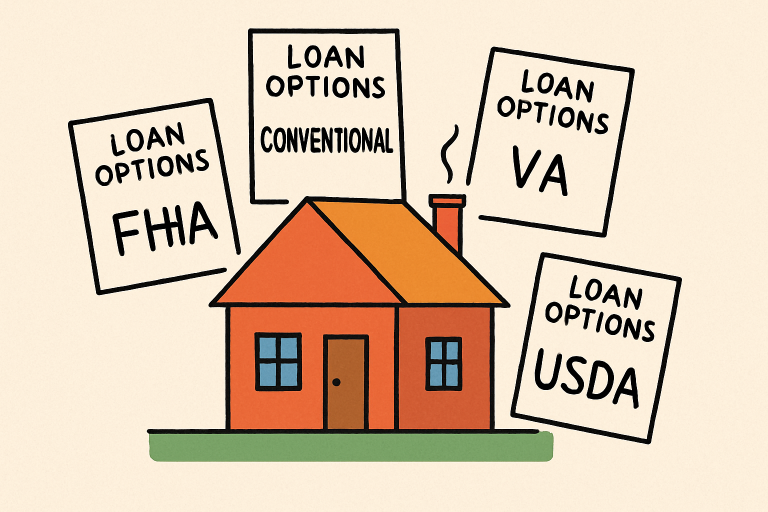
The right home loan depends on your current finances, future plans, and eligibility for special programs. Here are the primary types of mortgage loans buyers should consider:
- Conventional Mortgages: Not insured by a government agency, these loans are tailored toward buyers with higher credit scores and more robust financial profiles. While conventional loans typically require a higher down payment, they offer flexibility regarding terms and property types.
- FHA Loans: Backed by the Federal Housing Administration, FHA loans offer lower minimum credit score requirements and allow for down payments as low as 3.5%. They are a popular choice for first-time homebuyers or those with less-than-perfect credit.
- VA Loans: These loans are reserved for qualifying U.S. military veterans, active-duty members, and some surviving spouses. With no required down payment and competitive interest rates, VA loans make homeownership accessible to those who have served.
- USDA Loans: Designed to encourage home purchases in rural areas, USDA loans offer 100% financing, meaning no down payment is required for eligible buyers and properties.
Fixed-Rate vs. Adjustable-Rate Mortgages
Choosing between a fixed-rate and adjustable-rate mortgage (ARM) often comes down to your risk tolerance and how long you plan to stay in the home:
- Fixed-Rate Mortgages: The interest rate and monthly payments remain constant for the entire loan term, providing financial stability and predictable budgeting for homeowners.
- Adjustable-Rate Mortgages (ARMs): Interest rates are initially lower and fixed for an introductory period. After that, they adjust periodically based on market indices. ARMs may be advantageous if you anticipate selling or refinancing before the rate changes.
Government-Backed Loan Programs
Government-backed loans play a crucial role in helping buyers with less favorable financial profiles or limited savings achieve homeownership. FHA, VA, and USDA loans all serve different populations but share the benefit of lower down payments, competitive rates, and more flexible credit requirements. These programs are especially valuable for first-time buyers who may be navigating affordability challenges in today’s real estate market.
State-Specific Assistance Programs
In addition to federal programs, many states provide supplementary assistance to homebuyers. For example, through the New Jersey Housing and Mortgage Finance Agency (NJHMFA), first-time homebuyers and moderate-income households can access low-interest-rate mortgages and substantial down payment assistance. NJHMFA’s Down Payment Assistance Program offers up to $15,000 as an interest-free, forgivable loan, a crucial benefit for covering upfront costs and closing fees.
Preparing for Mortgage Approval
Being prepared is critical when applying for a mortgage. Here are some proactive steps to take:
- Monitor and improve your credit score by paying bills on time and reducing your credit card balances.
- Demonstrate stable employment and a reliable income history, which reassures lenders of your ability to make consistent payments.
- Start saving early for your down payment and additional costs such as appraisal, title insurance, and lender fees.
These practices can help streamline the approval process, minimize obstacles, and ensure you are ready to move quickly when you find the right property.
Final Thoughts
Gaining a solid grasp of home financing options and mortgage basics is essential for making smart, informed decisions in today’s dynamic housing market. By exploring the diverse range of loan types, understanding program requirements, and preparing carefully, buyers put themselves in a strong position to secure a mortgage that matches their unique needs. Whether you’re buying your first house or seeking a luxury real estate investment, the right financing approach can open the door to your dream home and a secure financial future.




Leave a Reply